
-
Contact Info
- Arusha - Tanzania
- +255 783 906 061
- info@oroktravels.com
- 24/7 Open
Sprawling across western Uganda’s dramatic landscapes, Queen Elizabeth National Park stands as one of East Africa’s most diverse and captivating wildlife reserves. Here, vast savannah plains unfold between volcanic hills and shimmering lakes, while dense forests and wetlands create a rich mosaic of habitats teeming with life.
Named in honour of Queen Elizabeth II following her visit in 1954, the park stretches from the foothills of the Rwenzori Mountains in the north to the deep blue waters of Lake Edward in the south. Between these natural boundaries lies a landscape shaped by ancient volcanic activity, dotted with crater lakes and wide grasslands that support a remarkable variety of wildlife.
Elephants move steadily across the plains, buffalo gather in large herds, and antelope graze among the acacia woodlands. Lions patrol the savannah, while leopards move quietly through the shadows of the trees. In the park’s southern Ishasha sector, a rare and fascinating phenomenon unfolds — the famous tree-climbing lions that lounge along the branches of large fig trees, an unusual behaviour that has made this region legendary among safari enthusiasts.
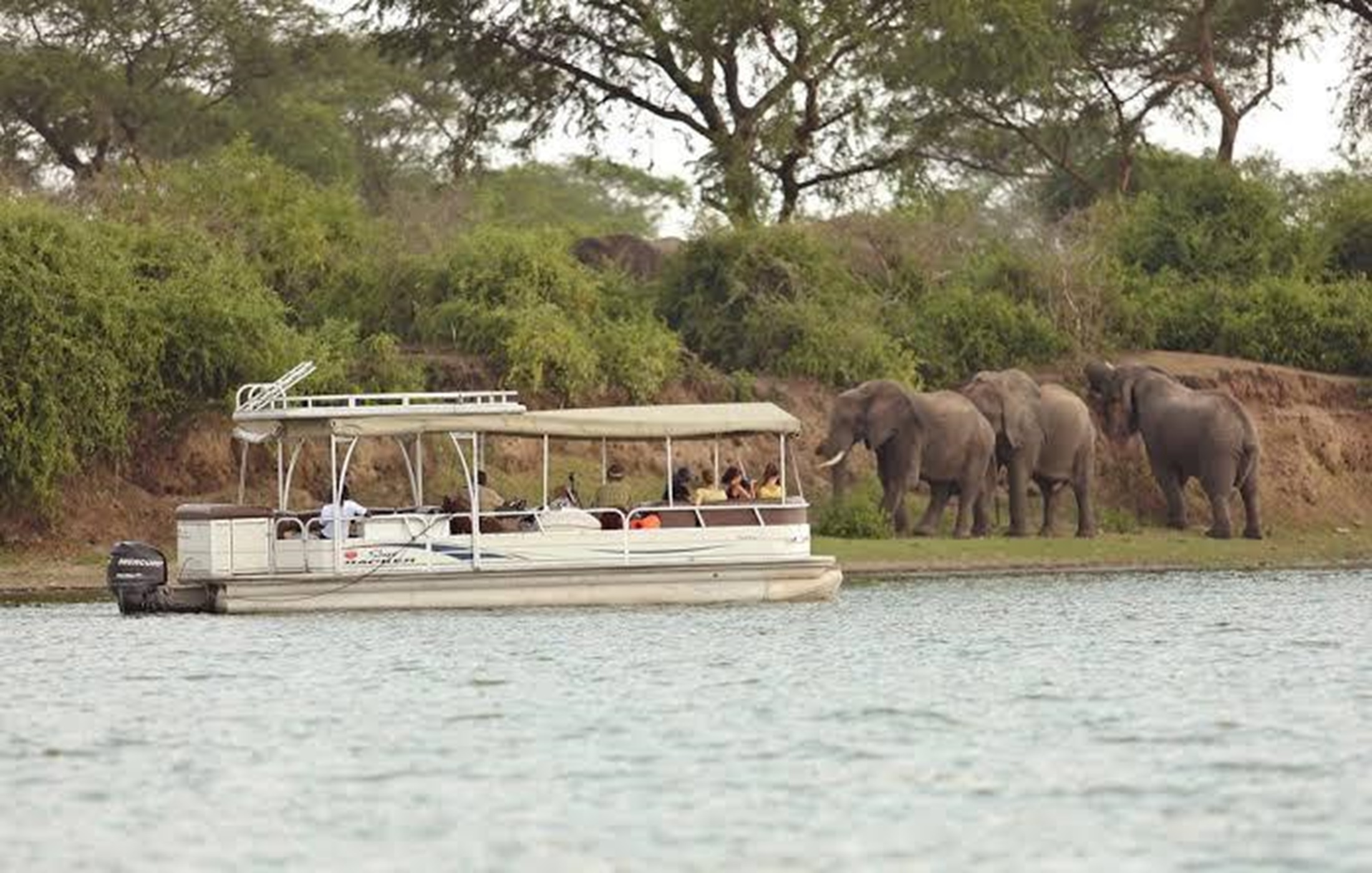
Water plays a central role in the park’s ecosystem. The natural channel connecting Lake George and Lake Edward forms the renowned Kazinga Channel, one of Africa’s most rewarding locations for viewing wildlife along the water’s edge.
With its sweeping scenery, extraordinary biodiversity, and ever-changing landscapes, Queen Elizabeth National Park offers a safari experience that feels both expansive and deeply immersive.